
Conference report
On the 17 October, fashion scholars, industry professionals, curators, archivists, students and fashion lovers gathered in the Erasmus University Rotterdam to explore the evolution of fashion prediction worldwide since the interwar period.
Fashion prediction was and is exercised in different ways and by different institutions: consulting companies, trade fairs, department stores, dedicated divisions in major companies and, more recently, bloggers and internet trendsetting companies.
 The conference, organized by Dr Ben Wubs and Dr Thierry Maillet on behalf of the Enterprise of Culture, was introduced with emerging issues of this trillion dollar industry that employs millions of people and has impacted on billions of people around the world on a daily basis. What is the business model behind the fashion industry? How is fashion organized and who are the actors? Already in 1924, the world understood that the success lies in the ability to predict the trends and predict them accurately.
Professor Regina Lee Blaszczyk from the University of Leeds (and Project Leader of the Enterprise of Culture) introduced the history of fashion prediction and current research on the topic. The importance lies in looking beyond the fashion icons and the heroes of the 20th century, how the fashion business was working, who was working behind the scenes and in rethinking the fashion system around the supply chain.
 As Professor Blaszczyk explores in her book, The Color Revolution, the history began with the chemical revolution and the ability to create fabrics that don’t fade. The French recognized the potential and created the so called colour cards to manage the boom of the new emerging colours. However, during and after World War I the cards were unobtainable and the American fashion industry struggled until the arrival of Margaret Hayden Rorke. She was America’s first professional colour forecaster. Rorke was responsible for monthly newsletters, color bulletins and publishing forecasts to help her male colleagues in manufacturing and retailing understand what women expected of fashion.
Subsequently, other forecasting pioneers were born such as Edward Bernays, the father of public relations, and Tobé Coller Davies (known as ‘Miss Tobé’), the founder of trend forecasting Tobé reports, the lives and work of whom were each presented to the conference by Dr Véronique Pouillard Maliks.
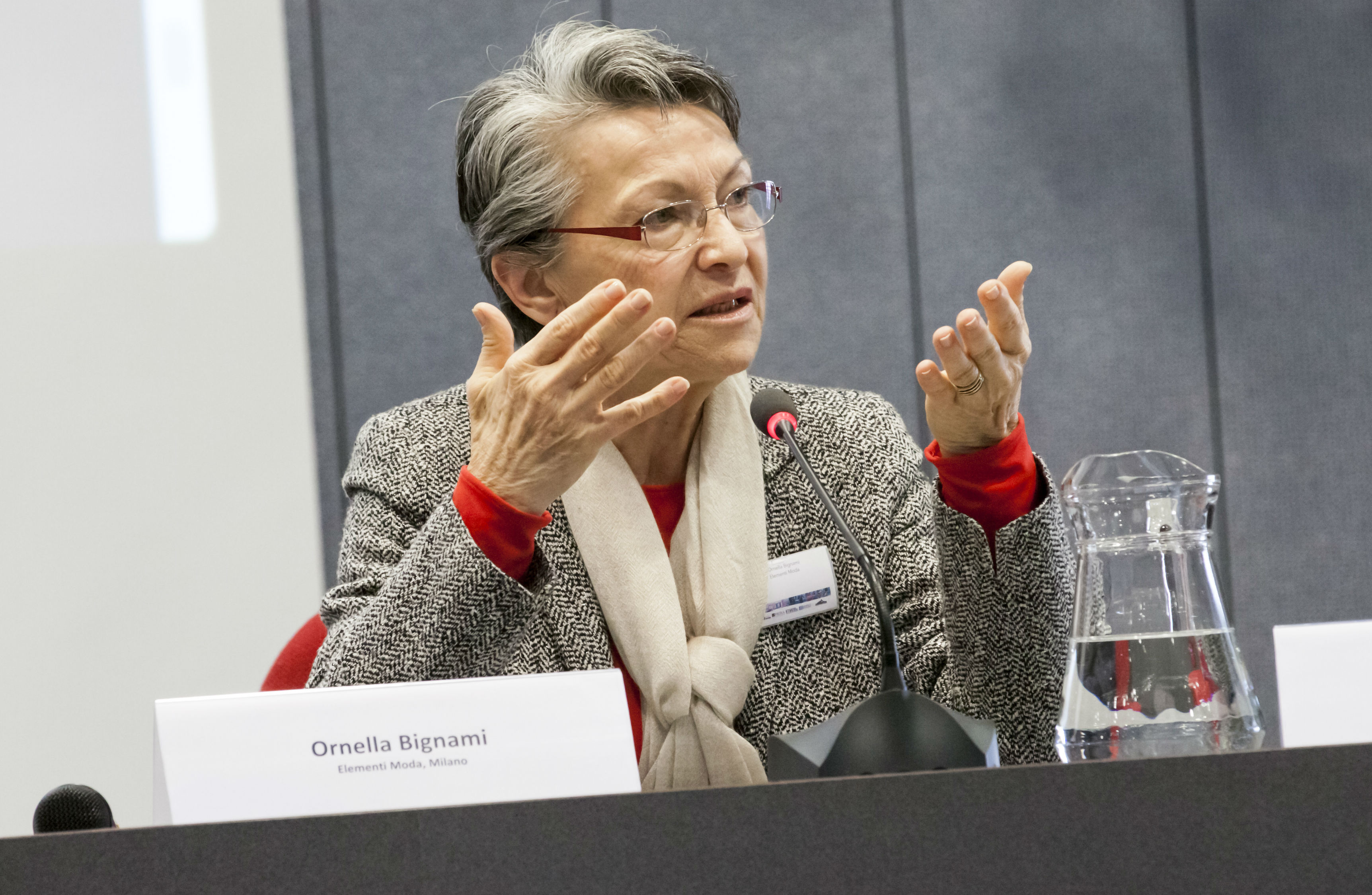
 Trend forecasting became even more important after World War II. Nelly Rodi, founder of NR Agency in Paris, was kind enough to share her story and experiences as a trend forecaster and the beginning of such a profession. She believes that the key of fashion is colour and fabric. With that in mind, the importance of two prominent trade shows were presented. Trade shows were, and still are, one of the most important market places where professionals and fashion lovers come to be inspired about future trends of diverse colours and materials. It is worth mentioning that the two most important tradeshows in the history are Première Vision and Interstoff. Prof. Dr. Francesca Golfetto and Dr Diego Rinallo talked about the beginnings and the reasons for success of Première Vision. Ornella Bignami from Elementi Moda Milano gave the audience more insights into the history of the former most prominent tradeshow Interstoff and its changing role from 1990 to today.
 The creativity of designers is endless and, as mentioned before, the tradeshows provide countless inspirations year after year. But what if it’s not enough? Should designers look back and let history inspire them? The answer is ‘yes’. Fashion Curator Ninke Bloemberg stated that in order to predict, we need to look into the past. Museums are hidden treasures with huge amounts of inspirational materials. One such treasure is the Fashion Institute of Technology (FIT) Library’s Special Collections and Archives in New York. FIT’s Head of Specials Collections and Archives, Karen Trivette Cannell, shared some of their unique collections including examples of past Tobé reports.
 New York, Paris, London and Milan are fashion capitals and synonyms of the latest and future trends. Would you think of Amsterdam as the future of fashion prediction? Maybe your answer is ‘no’, but the Director of HTNK, Mariette Hoitink, proved us wrong.
As a result of Amsterdam being the hub-cluster for the worldwide denim industry, Hoitink started the project The House of Denim. The House of Denim is a platform for craftsmanship & innovation in the denim Industry. Through the development of education, innovation, enterprise and networking projects, their mission is to make the world of jeans more sustainable and to inspire the denim professionals. You can find more information about The House of Denim project in a New Fashion Society blog post.
 Speaking of a different approach, Creative Director at Vlisco, Roger Gerards, presented how his idea ‘beyond prediction’ succeeded in Africa. Appreciating the past and craftsmanship, focusing on quality materials and connecting with customers are key methods in how to predict and how to succeed in the future. Tets Kimura, Flinders University of South Australia, explained to us Uniqlo’s alternative approach to global fast fashion. The trend is to focus on quality rather than endless searching for new trends. David Zajtmann of the Institut Français de la Mode shared his insights on globalization and the fashion industry, focusing on ‘hard facts and soft power’.
So where is the future of fashion prediction heading? Trend forecasting is a political process, as a group of people decides on the trends that should be followed. The globalization of the fashion industry is changing the tactics. Low cost Eastern countries are used for manufacturing and production and the Western world creates the influence. But the economy is not the only element of change. Digitalization and the online world play an important role as well.
WGSN, an online trend forecasting organization, is revolutionizing the way how designers work. Their extensive database holds tons of visual inspiration and workspace for designers to create and transfer the ideas to manufacturers. As Cher Potter from V&A, London indicated ‘we didn’t predict the future, we created the future’.
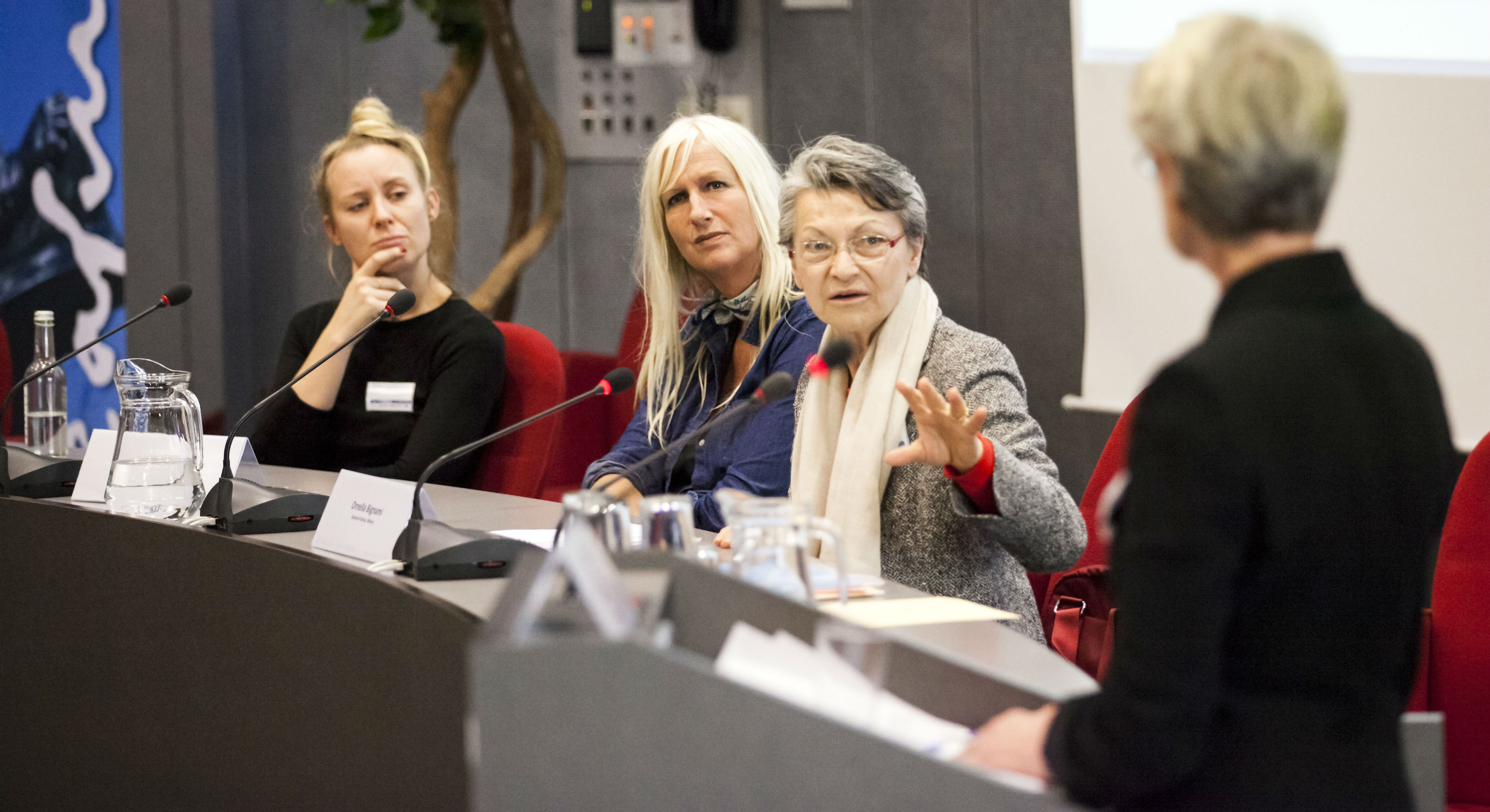 The event came to a close with a round-table panel facilitated by Ingrid Giertz-Mårtenson, Senior Advisor to the Centre for Business History in Stockholm. Members of the panel were encouraged to consider many themes arising from the conference and broader issues relating to fashion, and left us with the thought that fashion has changed and fashion is change: without change there would be no fashion.
Report by Andrea Houbova at The New Fashion Society, Rotterdam
Photos by Dennis Wisse